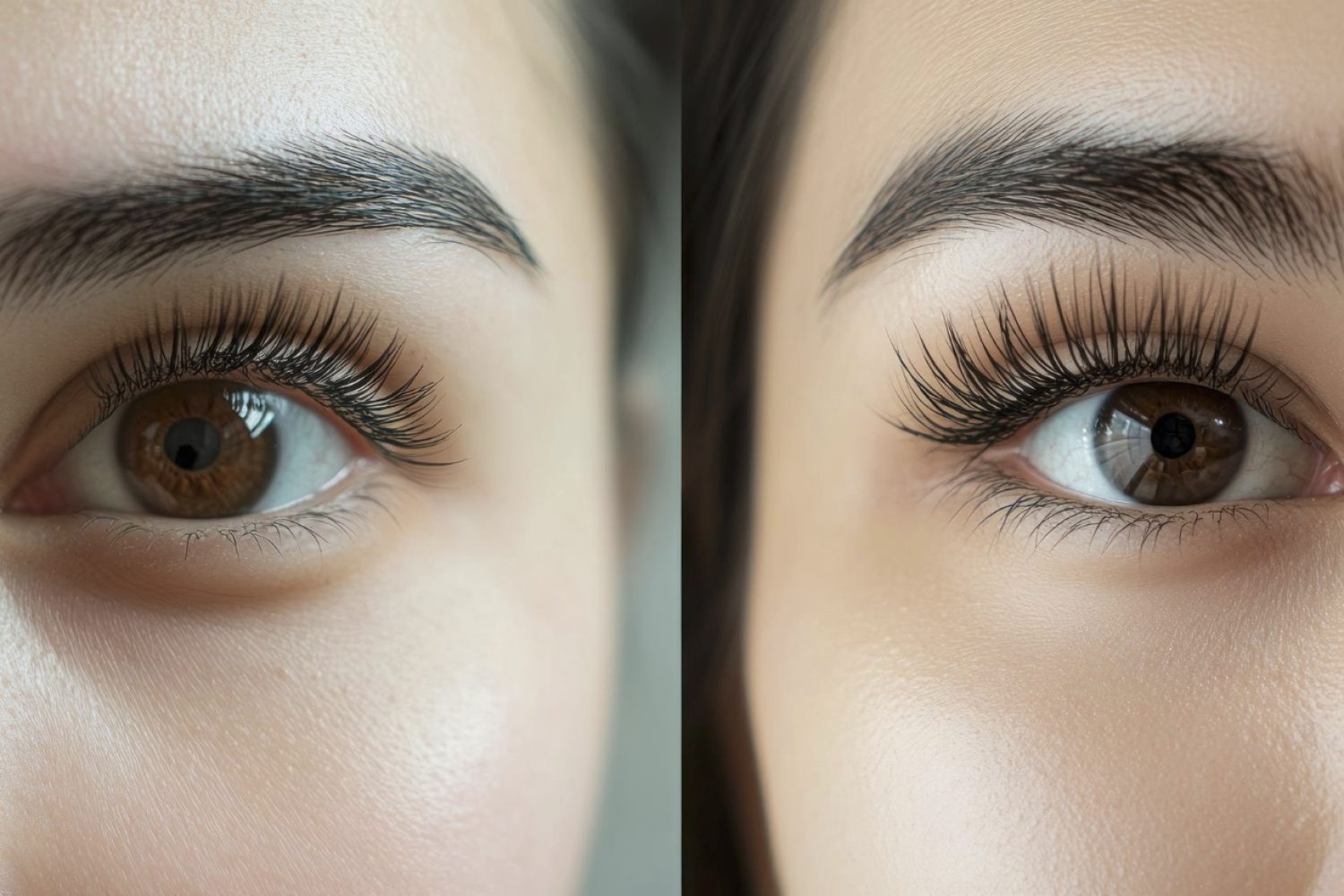
Both Korean and regular lash lifts are designed to enhance your natural lashes without adding extensions. They can make the lashes appear more visible, lifted and defined, but the products, application process and final shape may differ.
A Korean lash lift is often associated with a smooth, rounded result and a modern glue-free technique. A regular lash lift may create a more direct lift from the root, although the exact finish still depends on the system used, the chosen shield and the natural lashes.
At Lash Garden Academy, I offer a range of lash and brow treatments in Kettering, and I do not recommend a method based on its name alone. The right treatment should suit the direction, length and condition of your lashes, as well as the result you want to see.
What Is the Main Difference Between a Korean and Regular Lash Lift?
The main difference is usually the treatment system and the way the natural lashes are positioned and processed.
A regular lash lift normally involves attaching the lashes to a shield before applying products that temporarily reshape them. The technique can create anything from a soft curve to a stronger root lift, depending on the shield, product and application.
The Korean method I work with follows a glue-free approach and uses a cysteamine-based system. It is designed to create a smooth, flexible-looking lift while allowing the treatment to be adjusted to the client’s natural lashes.
However, the term “Korean lash lift” does not guarantee that every salon uses exactly the same products or follows the same process. Similarly, regular lash lift systems differ between brands. The treatment name is useful, but the products and the stylist’s technique matter just as much.
When clients visit me for a lash lift in Kettering, I look at how their natural lashes grow and discuss whether they want a soft curve, greater root elevation or a more open-eye effect before deciding on the approach.
How Do the Techniques Differ?
A traditional lash lift often uses an adhesive or balm to position the natural lashes against a shield. The lifting and setting products are then applied according to the system being used.
The Korean technique offered through Lash Garden Academy follows a glue-free process. Rather than fixing every lash firmly into place with traditional adhesive, the lashes are arranged and treated using a method developed specifically for the system.
This can make the overall process feel different from a standard lift, but neither technique should be treated as universally superior. A good result depends on:
- accurate timing,
- correct product placement,
- suitable shield selection,
- careful lash separation,
- the condition of the natural lashes,
- following the instructions for the specific system.
The Korean method can also include conditioning stages intended to leave the lashes looking smooth and glossy. These steps can support the appearance and feel of the lashes, but they do not make incorrect processing harmless. Every chemical lifting system still needs controlled application.
Cysteamine vs Thioglycolate – Does the Ingredient Decide Everything?
Cysteamine and thioglycolate-based ingredients can both be used in products designed to reshape hair. They work by changing bonds within the hair structure so the lashes can be set into a new position.
Korean lash lift systems are often associated with cysteamine. It is commonly promoted as offering a slower or more flexible processing experience than some traditional formulas. However, cysteamine is still an active processing ingredient. It requires correct timing, appropriate placement and a proper assessment of the natural lashes.
Some regular lash lift products also use cysteamine, while others use thioglycolate-based formulations. This means the ingredient alone does not define whether a treatment is Korean or regular.
The overall result depends on the complete formulation, its strength and pH, how it is used and how the lashes respond. An experienced stylist should understand the products they are working with rather than assuming that one ingredient is automatically gentle and another is automatically damaging.
How Do the Results Look Different?
A Korean lash lift is often chosen for a smooth, rounded curl that follows the natural line of the lashes. It can create a soft and polished result without making the lashes appear sharply bent.
A regular lash lift may create a more direct lift from the root, particularly when the client wants maximum visible length. It can also be customised to create a softer result, so it would be inaccurate to say that every regular lift looks dramatic.
The final appearance is influenced by:
- the length of the natural lashes,
- their natural direction,
- the shape and size of the shield,
- how the lashes are positioned,
- the processing time,
- whether tint is added,
- the finish requested by the client.
Some clients prefer the rounded appearance associated with the Korean technique. Others like the familiar effect created by treatments such as LVL lashes in Kettering, which I can also discuss as part of choosing a suitable natural lash enhancement.
The best result should open and define the eyes without causing the lash tips to fold back into the eyelid or creating a shape that feels too strong for the client’s features.
Which Method Is Better for Fine or Downward-Growing Lashes?
Neither method is automatically the best choice for every person with fine, short or downward-growing lashes.
Fine lashes need careful timing because they may process differently from thick, resistant lashes. A slower or more flexible system may be useful in some cases, but it still needs close observation throughout the treatment.
Downward-growing lashes may benefit from greater lift at the root, but the stylist also needs to consider eyelid shape and how much space is available above the lash line. A very strong lift is not always the most flattering answer.
The Korean method may work well for someone who wants a smooth curl with controlled elevation. A regular method may also create an excellent result when the products, shield and timing are properly selected.
The decision should be based on the lashes in front of the stylist rather than a general claim that Korean lifting is always better for fine lashes or that regular lifting is always stronger.
Is a Korean Lash Lift Better Than a Regular Lash Lift?
A Korean lash lift is not automatically better for everyone. It is a different approach that may be more suitable for particular lashes and preferences.
A Korean lash lift may be worth considering if:
- you prefer a smooth and rounded curl,
- you are interested in a glue-free lifting technique,
- you want a polished but natural-looking result,
- the cysteamine-based system is appropriate for your lashes,
- you want the lift shaped carefully around your eye area.
A regular lash lift may suit you if:
- you already know that a particular system works well for your lashes,
- you prefer a more direct root lift,
- you want a familiar LVL-style result,
- your stylist can achieve the desired shape safely with that method.
The quality of the application is more important than choosing a treatment because it is currently popular. Correct product timing, lash placement and shield selection can make a much greater difference than the label attached to the technique.
Can Either Method Include an Eyelash Tint?
Tinting can be added to many Korean and regular lash lift treatments, but it is not what defines either method.
A tint makes naturally fair lashes appear darker, which can help the final lift look more visible. It does not increase the length or number of lashes, but it can add contrast and create a more finished appearance.
If a client’s natural lashes are light, I may discuss eyelash tinting in Kettering alongside the selected lift. Whether tint is suitable and when it is applied will depend on the treatment system and the condition of the lashes.
Clients with naturally dark lashes may find that the lift alone provides enough definition.
Do Korean and Regular Lash Lifts Last Differently?
Both treatments gradually grow out with the natural lash cycle. The lifted lashes do not suddenly return to their original position on one specific day. Instead, new untreated lashes grow in while older lifted lashes eventually shed.
Results commonly remain visible for several weeks, but the exact duration varies according to:
- the natural lash growth cycle,
- lash length and condition,
- the products and method used,
- the strength of the initial lift,
- home care,
- previous chemical treatments.
A softer Korean-style result may appear to grow out more gradually because the transition between lifted and new lashes can be less noticeable. That does not mean the method always lasts longer.
A stronger regular lift may remain clearly visible for a similar period, although new straight lashes can sometimes create a more obvious contrast as they grow.
Does the Aftercare Differ?
Aftercare recommendations should be based on the system used during the appointment. It is therefore important to follow the instructions given by your stylist rather than assuming every lash lift requires exactly the same routine.
Immediately after treatment, you may be advised to avoid rubbing, strong steam, heavy eye products or prolonged moisture for a specified period. The required time can differ between systems.
Once the initial aftercare period has passed, treat the lashes gently and avoid using a mechanical eyelash curler. A suitable conditioning serum may also be recommended, particularly if the lashes feel dry.
A Korean lift does not remove the need for aftercare, and a regular lift does not automatically require more maintenance. In both cases, the goal is to protect the new shape while the treated lashes continue through their normal growth cycle.
How to Choose the Right Lash Lift
Start by deciding what you want the treatment to change. Some clients mainly want lashes that are easier to see. Others want greater root lift, a rounded curl or a polished result without extensions.
A consultation should consider:
- whether the lashes are fine, thick or previously processed,
- their natural direction,
- their current condition,
- the space around the eyelid,
- the type of curl requested,
- previous reactions or sensitivities,
- the system the stylist has been trained to use.
Photographs can help explain your preferences, but the result may need to be adjusted to suit your natural lashes. A shape that looks attractive on one person may sit differently on another eye.
The right treatment is the one that gives you a flattering result while respecting the condition of your natural lashes.
Korean Lash Lift Training for Lash Artists
The Korean method requires more than changing the products used during a standard lash lift. Lash artists need to understand the glue-free process, cysteamine-based formulas, shield selection, lash positioning and how to adapt the treatment to different lash types.
For professionals who want to introduce this method to their services, I offer Korean Lash Lift training at my studio in Kettering. The course provides an opportunity to learn the technique in the context of practical salon work rather than relying only on short online demonstrations.
Training is particularly important when moving between product systems. Timing, application and aftercare should always follow the method being taught rather than assumptions carried over from a different lift.
Frequently Asked Questions
Is a Korean lash lift better than a regular lash lift?
Not for everyone. A Korean lash lift may be better if you prefer its glue-free process and smooth, rounded result. A regular lift may be more suitable if you prefer the effect created by that system. Natural lash condition and correct application are more important than the treatment name.
Does a Korean lash lift use different products?
The Korean method used at Lash Garden Academy uses a glue-free, cysteamine-based system. Other Korean and regular lift systems may use different formulations, so it is worth asking which products and method your stylist follows.
Is a Korean lash lift suitable for fine lashes?
It may be suitable, but fine lashes still require careful timing and product placement. The stylist should assess their condition before deciding which system and processing time to use.
Can both methods create a natural result?
Yes. Both Korean and regular lash lifts can be adapted to create a natural-looking effect. The shield, placement and requested curl influence the final shape.
Which lash lift gives a stronger curl?
A regular lift can sometimes create a more direct root lift, while Korean lifting is often associated with a smoother curve. However, either technique can produce different levels of lift depending on how it is performed.
Do Korean lash lifts last longer?
Not necessarily. Both methods grow out with the natural lashes. How long the result remains visible depends on the natural lash cycle, the chosen system and the treatment result.
Is Korean lash lift aftercare different?
The recommendations may differ according to the products used. Follow the specific advice provided after your appointment instead of applying one universal aftercare rule.
Can a tint be added to both treatments?
In many cases, yes. Tint can make fair natural lashes look darker and help the lifted shape appear more defined. Its suitability and timing depend on the treatment system.
Is a Korean lash lift safe for sensitive eyes?
It should not automatically be described as suitable for every sensitive client. Cysteamine and other treatment ingredients can still cause reactions. Tell your stylist about previous sensitivities and follow any patch-testing guidance provided.
Can I switch from a regular lift to a Korean lash lift?
Potentially, but the stylist should assess the condition of the lashes and the timing of the previous treatment first. Reprocessing lashes too soon may increase the risk of dryness or overprocessing.
Final Thoughts
The difference between a Korean and regular lash lift is not simply that one is gentle and the other is strong. The methods can use different products and application processes, and they are often associated with different types of curl, but both require professional judgement.
A Korean lash lift may be the right choice if you want a glue-free technique and a smooth, rounded result. A regular lift may suit you better if you prefer the effect of a familiar lifting system. The best decision should always be based on your natural lashes and the finish you want, not on the assumption that one treatment is better for everyone.